

Instagram
Facebook
YouTube
Contact
Neue Notenrollen

The T100 (red) Skala from Welte

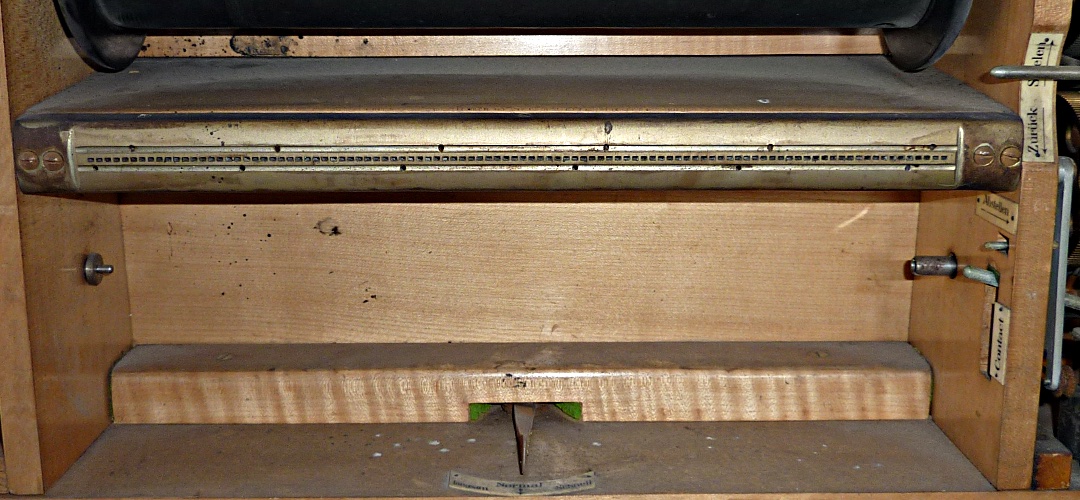
Die T100 Skala von M. Welte & Söhne (Freiburg) war das erste Reproduktionssystem dieser Art und erregte weltwundergleiches Aufsehen in 1904/1905. T100 bezieht sich dabei auf die 100 Löcher, die der Notengleitblock hat. Es werden 80 Töne gespielt, 20 Lochungen werden für die komplexe Betonungssteuerung verwendet. „Rot“ bzw. „grün“ leitete sich aus der charakteristischen Farbe des Notenrollenpapiers ab – dieses war bei den T100 Rollen meistens rot – und bei den T98 Rollen meistens grün. Jedoch sind auch Rollen des jeweils anderen Formats in anderen Papierfarben hergestellt worden.

Die meisten Aufnahmen wurden für das Welte rot System gemacht – für die erst 1924 eingeführte Welte grün Skala wurden die schon vorhandenen Welte T100 (rot) Aufnahmen in das kleinere Rollenformat umkodiert und neu umgestanzt.

Möchten Sie uns unterstützen?

Liebe FASZINATIONPIANOLA – Besucher ❣️

We love Pianos / Pianolas and offer a lot of extraordinary things on these pages. This involves a lot of time and expenses for us.

We welcome feedback and appreciative support so that we can continue to provide special finds from our worldwide research.


For voluntary contributions at paypal.me/faszinationpianola we are very grateful 🤗 in the context of §60 c UrhG, expressly without profit-making intention.

This is a PayPal.Me link, you can find out more about it here:

What is PayPal.Me? | PayPal DE

PayPal.Me | Pay thru link | PayPal DE

New: The Piano Book

"Anyone who loves the piano will love these stories."
(Michael Ashton, Korrepetitor, Musikarrangeur, Hamburg)

“Marc’s extraordinary passion and his deep knowledge of the history of pianos, pianolas, and piano rolls come alive in this book.”
(Dr. Peter Phillips, PhD Musicology, Sydney University)

12 stories—all inspired by true events,
88 practical answers to fascinating questions about the piano.
2 checklists: ‘What Is My Piano Worth?’ and ‘What to Do If Your Piano Has Ivory Keys.

More than 400 pages filled with a fascination for pianos—and, above all, for the people whose lives and stories are intertwined with these instruments in so many different ways.