

Instagram
Facebook
YouTube
Contact
Neue Notenrollen

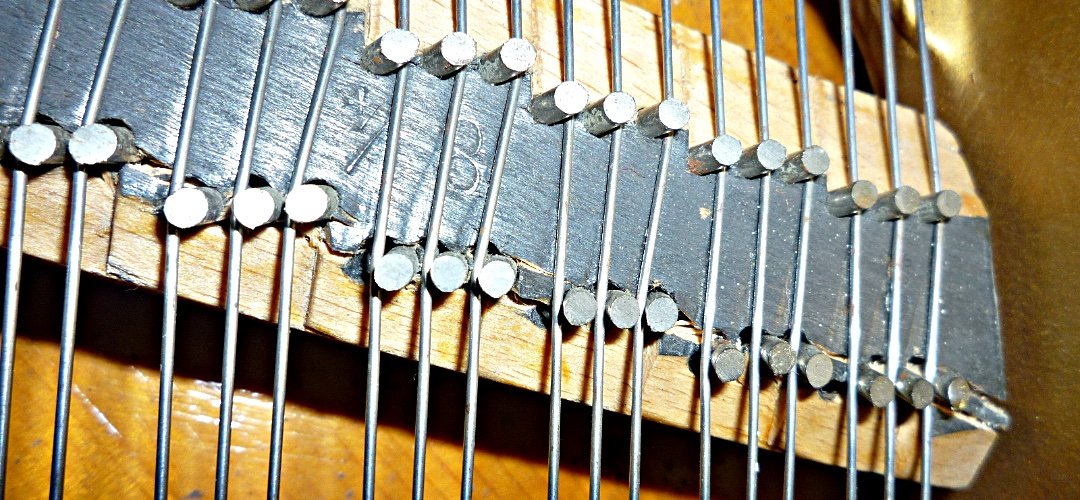
Cracks in the Piano bridges?

The bridges in the piano are glued to the soundboard and connect the strings to the soundboard in terms of sound. These bridges have to withstand high loads and, as they are also made of wood, are at risk of cracking due to drying. Fine hairline cracks on bridges are normal signs of ageing - as long as the bridge pins still provide stable string guidance, this is not necessarily critical. However, transverse cracks or breaks in bridges are, as the bridge pins lose their grip.

The exact position of the bridges is also essential for a good and noise-free sound experience, as otherwise the strings are not guided exactly or the so-called bridge pressure - a defined height difference at the bridge that exerts pressure on the strings from below - is no longer sufficient.  

In front of the tuning pegs, the strings run over metal bridges or through agraffes - cracks or tears can also occur here. Both are difficult for the layman to recognise - this damage is the kind of damage that a professional knows how to look for and find.

Möchten Sie uns unterstützen?

Liebe FASZINATIONPIANOLA – Besucher ❣️

We love Pianos / Pianolas and offer a lot of extraordinary things on these pages. This involves a lot of time and expenses for us.

We welcome feedback and appreciative support so that we can continue to provide special finds from our worldwide research.


For voluntary contributions at paypal.me/faszinationpianola we are very grateful 🤗 in the context of §60 c UrhG, expressly without profit-making intention.

This is a PayPal.Me link, you can find out more about it here:

What is PayPal.Me? | PayPal DE

PayPal.Me | Pay thru link | PayPal DE

New: The Piano Book

"Anyone who loves the piano will love these stories."
(Michael Ashton, Korrepetitor, Musikarrangeur, Hamburg)

“Marc’s extraordinary passion and his deep knowledge of the history of pianos, pianolas, and piano rolls come alive in this book.”
(Dr. Peter Phillips, PhD Musicology, Sydney University)

12 stories—all inspired by true events,
88 practical answers to fascinating questions about the piano.
2 checklists: ‘What Is My Piano Worth?’ and ‘What to Do If Your Piano Has Ivory Keys.

More than 400 pages filled with a fascination for pianos—and, above all, for the people whose lives and stories are intertwined with these instruments in so many different ways.