




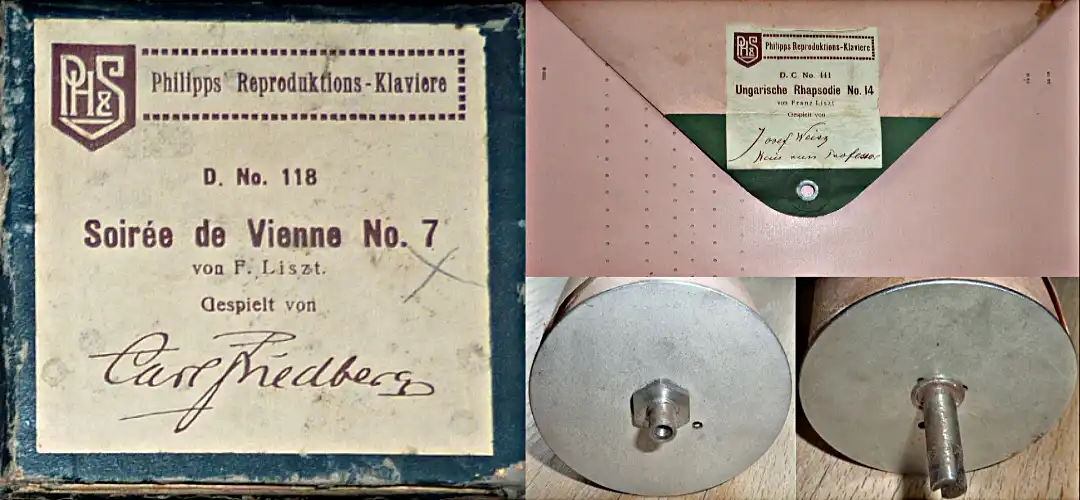
In 1908, Philipps presented DUCA on the market as a competing system to the Hupfeld DEA and the Welte-Mignon. DUCA could play one note more than the two competing systems – a small difference that was used heavily in marketing. The DUCA music rolls are the narrowest variant of the reproducing rolls – Philipps argued that the narrower the paper, the less susceptible it is to humidity-related changes. And that is indeed the case. DUCA reproducing rolls often have a strikingly reddish or pink paper and are easy to recognize by their solid metal flanges, which only this type of reproducing roll has.
The box and the music roll bear a label with the name “Philipps Reproduktions-Klaviere”, roll number, title, performer and often also the roll price at the time – there are no photos. There is a round eyelet at the start of the roll for hooking it into the take-up spool. Well-preserved original DUCA rolls are now rare. The paper is 26.5 cm (10⅜ in) wide.