




SURVIVING INSTRUMENTS
The heyday of reproducing instruments, from around 1905 to 1930, is now some 100 years, one or two world wars and several economic and fashion crises behind us. For a wide variety of reasons, the clear majority of instruments and music rolls have therefore not survived. Today there is no comprehensive overview of how many reproducing instruments still exist.
LIST OF SURVIVING REPRODUCING INSTRUMENTS
The heyday of reproducing instruments, from around 1905 to 1930, is now some 100 years, one or two world wars and several economic and fashion crises behind us. For a wide variety of reasons, the clear majority of instruments and music rolls have therefore not survived. Today there is no comprehensive overview of how many reproducing instruments still exist.
In an ongoing “research and study project”, an attempt is being made to record in a list at least the majority of the instruments distributed around the world [Welte red, Welte green, Hupfeld Phonola, Hupfeld Clavitist, Hupfeld Phonoliszt, Hupfeld DEA and Hupfeld Duo/Tri-Phonola, Aeolian DUO-ART (only in combination with Steinway), Philipps DUCA/Pianella as well as Ampico A and Ampico B and Welte Licensee instruments].
You can request the current version of the list from us. I would be very grateful for additions, hints and suggestions for this research! On this page you will find tips on how to find the often hidden serial numbers on your instrument.
The main reasons for the drastic reduction in the number of reproducing instruments are briefly described here.
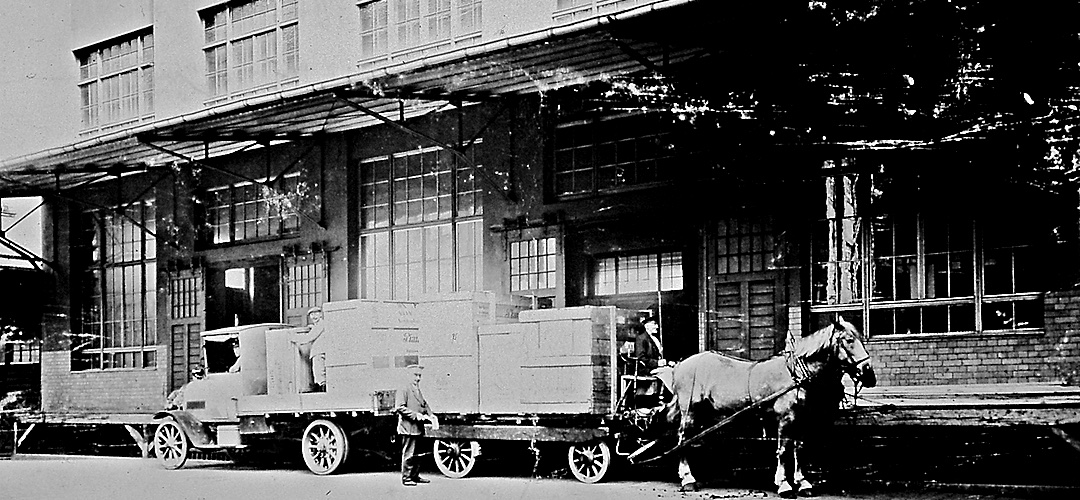
Probably the largest share of the instruments was destroyed in the world wars. In the difficult period immediately afterward, too, many of the instruments that had not yet been destroyed were lost to the weather, demolition, burned as firewood, dismantled because they no longer worked, or simply thrown away. In the USA, however, Ampico, Duo-Art and Welte Licensee instruments were not affected by this.
The economic hardship of the 1920s – but above all the change in musical fashion away from the piano toward radio and gramophone records, and the shift of luxury spending toward cars or other publicly visible status symbols – triggered a mass sell-off of used instruments, among others to dealers at rock-bottom prices. Their warehouses were full and they tried to find buyers. Often, however, this no longer succeeded, so that further instruments disappeared in the bankruptcy estates of many dealers around 1929.
After about 20–30 years, technical problems arose with reproducing instruments, whether they were used intensively or not at all. This was often another reason to sell these instruments, put them into storage, strip them of their player technology or simply dispose of them. This was the last major wave of attrition. The instruments that survived then found their way into museum storage, to collectors and to dealers. Today, reproducing instruments that surface more or less from their first owners are found only very rarely.
FIRST FINDINGS FROM THE SERIAL NUMBER ANALYSIS
Unfortunately, exact production figures and continuous serial number lists of the individual manufacturers such as Welte or Hupfeld have not been handed down or have not been discovered to date, so that a clear relationship between instruments produced and instruments surviving can no longer be established. However, serial number lists have survived for most piano manufacturers, so that the year of manufacture of upright pianos, grand pianos and cabinets can be determined well. From this, the serial numbers on the pneumatics can then also be classified accordingly. One concrete source is the sales figures of the largest suppliers to Welte, Philipps and Hupfeld – namely Feurich, Steinway & Sons, Bechstein, Ibach and others.
Even though by no means all instruments have been recorded to date, many reproducing instruments of each type have now been located. A first look at the distribution (geographical, ownership, designs, construction, etc.) arouses curiosity. Data collection in Germany is easier at first, which easily explains why just under 50% of the Welte instruments recorded are currently located in Germany. Nevertheless, this may also tend to reflect the marketing of the time. Of the Welte instruments recorded to date, a little more than 30% are in museums, the others in collectors’ and private ownership. Once all museum storage facilities have been searched, this figure will probably increase. Of the Welte instruments recorded to date, a little more than 25% are push-up players, less than 10% cabinets, about 30% upright pianos and a little more than 30% grand pianos. It is not surprising to see that almost 80% of the Welte instruments recorded to date are equipped with the Welte red (T100) system, since Welte no longer sold such large quantities after the introduction in 1924.
It is striking that some pneumatic numbers are out of sequence, and yet a continuously ascending sequence of numbers can be discerned. Individual displaced numbers can be explained by the production process of the time, since piano actions as well as pneumatics were sometimes brought forward by the respective manufacturers, or parked in the production process and used later.
It is important to know that piano manufacturers such as Feurich or Steinway assigned the piano’s serial number quite early in the manufacturing process – usually at the so-called “wedding”, i.e. when the back and the cast-iron frame were joined. After the piano, or the back in the case of cabinet installations, was completed, the instrument was sent to Welte in Freiburg. There the Welte mechanism was installed, the case number stamped on and the finished instrument put on sale. This means there can be a difference of 1–2 years between the piano maker’s serial number and the Welte serial number. As an example: according to the Steinway piano serial number, Steinway-Welte piano no. 151767 was built in 1911, but it was not shipped by Steinway & Sons to Freiburg until March 11, 1912. Depending on when it was fitted with the Welte technology there and received the Welte case number, this could have been at the end of 1912 or even early 1913. In 1912, more than 90 Steinway pianos were sent to Freiburg, which, in different designs and variants, remained in the production process for different lengths of time, so it is easy to understand that serial number sequences show irregularities in the production process from time to time.
SERIAL NUMBER ANALYSIS: WELTE
In addition to the first impressions regarding the distribution of the instruments, some hypotheses and findings can already be derived from the serial number sequences. The oldest Welte instrument identified in detail to date is a Feurich-Welte cabinet with Feurich serial number 18686 and Welte serial number 1322 from 1906. The article by Hans-W. Schmitz on “The production figures of Welte instruments” mentions a cabinet with case number 640 – which would accordingly have been built considerably earlier. The highest Welte serial number found to date is 7216, on a Blüthner-Welte grand piano with serial number 114669 from 1930. Unfortunately, Welte push-up players cannot be dated by a piano serial number, since they have no piano interior – the serial number in front of the wind motor seems to be a separate count for the push-up players.
The case number on the back of each Welte-Mignon cabinet, push-up player, upright and grand piano seems to be the consecutive Welte serial number. In fact, it seems that Welte had already started the count with its orchestrions and continued it with the Welte-Mignon cabinet etc. In the article “Welte Orchestrion – Years of Plenty” by Durward R. Center, this assumption has already been made, and some Welte orchestrion serial numbers are listed with production dates (from handwritten information inside the respective instrument):
Serial number: 57 (built 1893)
Serial number: 659 (built 1905)
Serial number: 2816 (built 1910)
Compared with, for example, the Welte-Mignon cabinet serial numbers from our list, whose years of manufacture can be clearly determined via the piano manufacturer’s serial number, these orchestrion serial numbers fit in logically:
Case serial number of the Feurich-Welte cabinet: 1322 (Feurich back built 1906, Feurich back with tuning keyboard delivered on May 10, 1906 for 315 marks)
Case serial number of the Feurich-Welte cabinet: 2821 (Feurich back built 1909)
Case serial number of the Steinway-Welte cabinet: 3718 (Steinway back built 1912, shipped from S&S to Freiburg on December 4, 1912)
The examples of identified Welte-Mignon push-up player case serial numbers also fit consistently into the serial number sequence. The push-up player with case number 1941 on the back (wooden slide block, no serial number at the wind motor) could accordingly be dated to around 1908, the year in which Welte launched pianos with built-in players and push-up players. It remains to be investigated whether the Welte Philharmonie organs also had such a Welte case number.
So if we assume that Welte numbered its instruments consecutively with the case number, every Welte-Mignon instrument could be dated quite clearly. The more complete the list of surviving Welte-Mignon instruments becomes, the more precise the dating.
It will be interesting to narrow down more precisely how many Welte-Mignon instruments were made in total. In his analysis, Hans-W. Schmitz presented a good derivation of ~4,200 Welte-Mignon instruments produced. If the Welte case serial number 7216 mentioned above for the Blüthner grand piano is one of the last – and depending on how many orchestrions (and possibly organs) were built (assumption ~1,500) – the number of Welte-Mignon instruments produced could also have been 5,000–6,000. This is supported by the evaluation of the Feurich sales books we have begun, since considerably more instruments appear to have been delivered to Welte than previously assumed. The same applies to the deliveries from Ibach to Welte available to us. As soon as new findings have been gained, they will be presented here together with the resulting hypotheses.
SERIAL NUMBER ANALYSIS: HUPFELD
With Hupfeld DEA, Phonola, Duo- and Triphonola, a larger number of piano brands can be found into which these systems were installed. The serial numbers of the upright and grand pianos make it possible to date them. Here, too, the Hupfeld player unit numbers line up along an ascending sequence, albeit with numerous displacements, so that systematic numbering can be assumed here as well. As with Welte, it seems likely that this player unit number is also continuous for the push-up players. According to the current state of research, the push-up player with serial number 2168 would thus have the lowest player unit number – and number 55832 on a Phonola (88) upright piano the highest Hupfeld number.
What is striking here, compared with Welte, is the considerably smaller number of DEA, Duo- and Triphonola reproducing instruments. Although fewer of these instruments have certainly survived over time because they were less popular with private owners, collectors and museums than the Welte-Mignon, one can certainly also conclude that considerably fewer Hupfeld reproducing instruments were sold. Hupfeld’s market success lay above all with the Phonola, the Clavitist and the orchestrions. Even though, according to its own advertising, Hupfeld built 1,000 Phonolas and more per year in its heyday from 1902 to 1913, the later five-digit production numbers seem far too high – it seems likely that around 1915 the count for upright and grand pianos may have continued from number 30000, perhaps to create a reserve above the already high number of Phonola push-up players. In any case, as the largest European factory for mechanical musical instruments, Hupfeld produced incredibly large quantities. As soon as new hypotheses/findings have been gained, they will also be presented here.
General Note
We are grateful for voluntary contributions in recognition and support of our considerable financial and time investment in providing such documents in our “Treasure Trove” section – within the scope of Section 60c of the German Copyright Act (UrhG), expressly without any intention of making a profit. If you would like to support this voluntarily, you can do so here.