




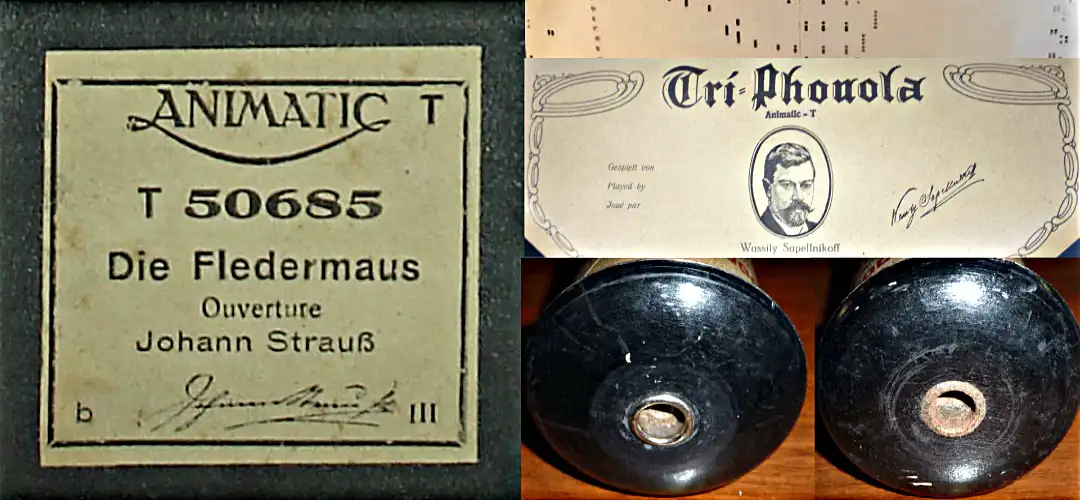
In 1919, Hupfeld combined the further development of the DEA reproducing system with the possibilities of the 88-note Phonola and developed the Triphonola, in order to implement the standard roll format 11 years after its standardization. As with the DEA roll, all the information for reproducing the piece of music is on the roll. The paper (with Hupfeld watermark), spool and flanges are very similar to those of the Hupfeld Animatic 88-note music rolls. The green boxes bear a label on the front with the name Tri-Phonola or Animatic-T, the roll number, the title and the pianist. The same label is also on the music roll – often next to a photo of the pianist. This music roll runs from top to bottom. At the start of the roll, the date of manufacture is usually also printed on the back. There is a hook at the start of the roll for hooking it into the take-up spool. The paper is 28.6 cm (11¼ in) wide.
Hupfeld re-encoded the artist recordings previously made for the Phonoliszt, Phonola and DEA for the Tri-Phonola and cut them in the new roll format – just as it had done since 1912 for the Hupfeld Animatic rolls. Analyses show that Hupfeld also made editorial changes in the process, e.g. to the pedaling and tempos. Why these changes exist is unclear – we suspect that Hupfeld modernized the recordings, by then more than 10 years old, and adapted them to the taste of the time. As a result, the rolls are very beautiful to listen to. For performance research, however, a DEA system is closer to the authenticity of the recordings.
Occasionally, Tri-Phonola rolls are also found in Animatic boxes without this being apparent from the label. It can only be recognized from the encoding – the additional perforations at the very edge of the roll right at the start.