




To be able to use a piano, all you really need is suitable seating and enough light for your needs.
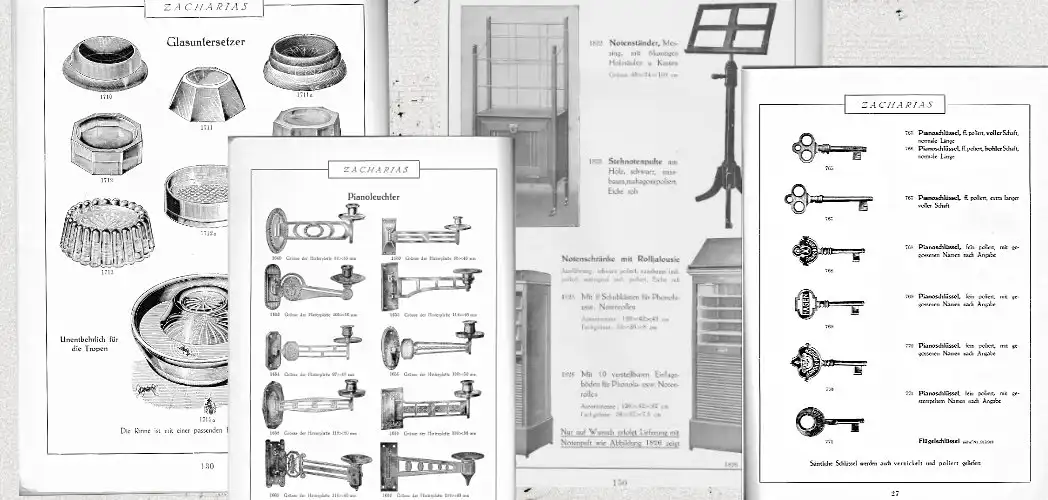
Accessories such as piano candlesticks, keys, a metronome, a fallboard finger guard, etc. can be added as needed. For the finish, depending on its nature, just a feather duster or a lint-free cloth (do not use harsh products). For experienced piano owners, a soundboard cleaning rod set and your own tuning hammer for small adjustments are also worthwhile.
To preserve the piano’s value, the humidity where the piano stands should definitely be monitored constantly. In our experience, the commercially available low-cost hygrometers sometimes show considerably wrong values – it is worth choosing a really good device here; in our experience, for example, the testo 174H, a so-called data logger that documents the room climate and records the data. This proof can become important, as the owner usually has to provide evidence in the event of a warranty claim.
If necessary – especially during the heating season – a digitally controlled humidifier is required. We have had good experiences with the AOS W2055D (now Boneco) – and, for large rooms and longer absences, with the AirTek PCMH45-WD.
With a practice mute (a pedal or cable pull that lowers a felt in front of the hammers), you can be considerate of neighbors or people sleeping. Piano makers can retrofit this relatively inexpensively on the vast majority of pianos. Installing silent or player systems can also be an option if it increases the joy of playing and use. This Ladykracher sketch, uploaded to YouTube by MySpass, takes on the topic of neighbors who play the piano too often or too loudly…
Hier klicken, um den Inhalt von YouTube anzuzeigen.
Learn more in YouTube’s privacy policy (opens in a new tab).