




In their defense: pests are only pests because we suffer damage to the piano or to our health from them and don’t want that. Seen this way, we humans are also pests for others – and probably the biggest ones.
Essentially, four types of pest infestation are critical for a piano: woodworm, moths, mice and mold. The latter is critical not only for the piano but above all for your own health.
Because of its materials (felts, wood, etc.) and its environment (sheltered and poorly ventilated), a piano offers ideal conditions for these pests. Mold (“white mold”) benefits from the higher humidity a piano needs, the often inadequate ventilation, and a location sometimes near exterior walls. The fungal spores are toxic to humans and must be removed professionally.
Even today, these pests go about their business unnoticed inside instruments in the best and best-kept households. As a rule, an unplayed piano is more likely to be visited by pests than one that is played. Pianos in storage are particularly at risk. Modern materials in newer pianos are already pretreated against pests – but even this does not always protect them.
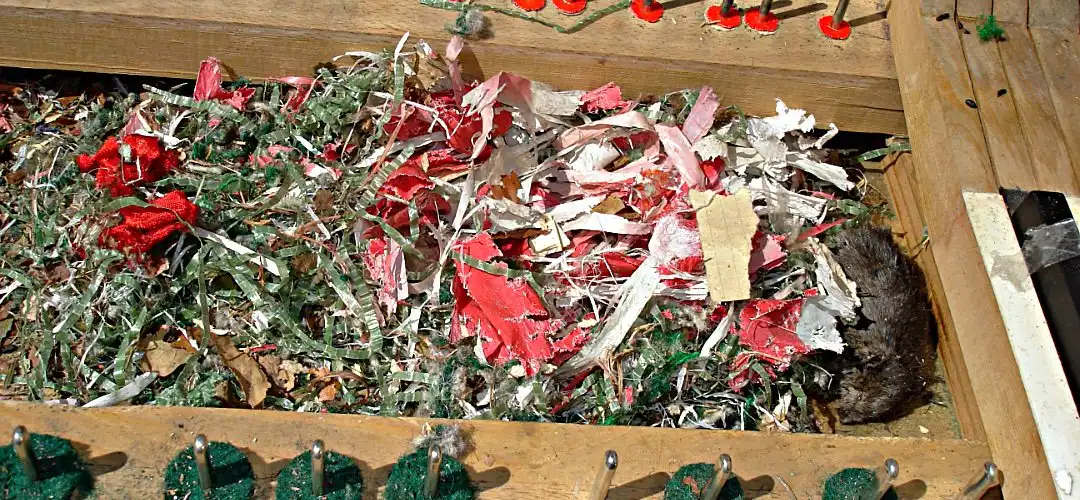
The title photo shows a nasty example for the instrument, the owner and the mice alike: a mouse nest with two dead animals in it. Before that, however, the animals had caused considerable damage to the action felts and the keys and key bed. Mouse urine also does great damage inside the instrument. So – unless there is a diligent cat in the house – it is worth taking other suitable measures against the rodents to preserve the instrument’s value. Old pianos usually have a protective grille on the back and sometimes in the pedal area to keep rodents out. But mice still always find a way.
Please also feel free to read about our piano appraisal service.