




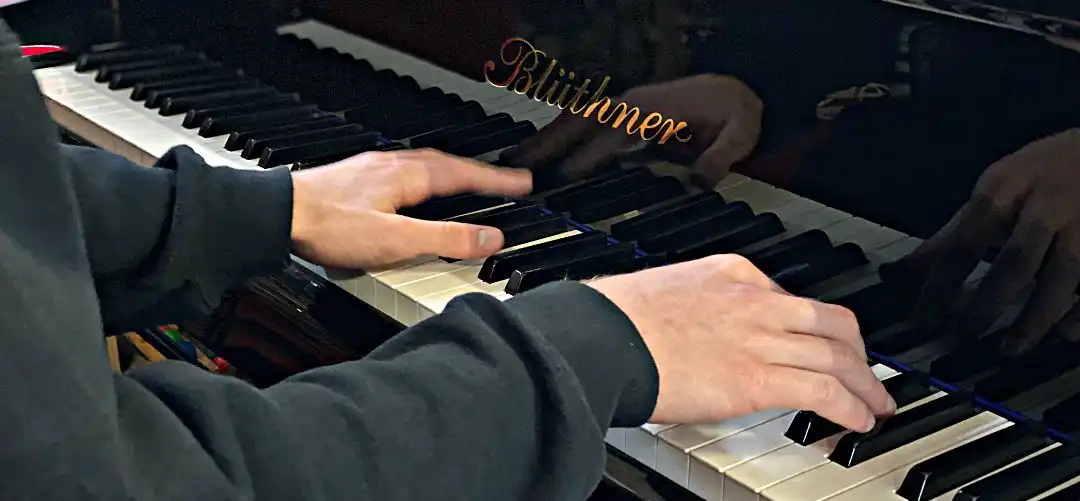
We perceive sound very subjectively. In addition, every instrument, even of the same model, sounds quite individual – and even different at different times. Assuming decent build quality and condition, the difference between sounds is not necessarily a question of good or bad, but of subjectivity, tonal philosophy and manufacturer preference.
In the past, the range of sounds was very varied. Manufacturers tried to make their individual character more distinct. Since the market has become increasingly dominated by Steinway and Yamaha, with the industrialization of piano production and changing demand, pianos have become much more alike. Overall, modern instruments have tended to become more precise in sound – and more present due to ever higher tuning pitch. The transparent sound of modern instruments, which can be perceived as clear to hard and metallic, has found broad acceptance. A well-voiced instrument, however, can produce many sounds – entirely according to individual wishes.
It is therefore not really possible to categorize sounds. With newly produced pianos, the sounds of each manufacturer’s piano models are already very similar. With old pianos, this varies greatly depending on the production period and the instrument. In our showroom there are Steinway and Bechstein grand pianos from around 1900 that sing in a way usually attributed only to Blüthner grand pianos. And vice versa.
Even if this makes things a little more difficult – the search for the desired sound can take time and hold surprises. But it is worth it.