




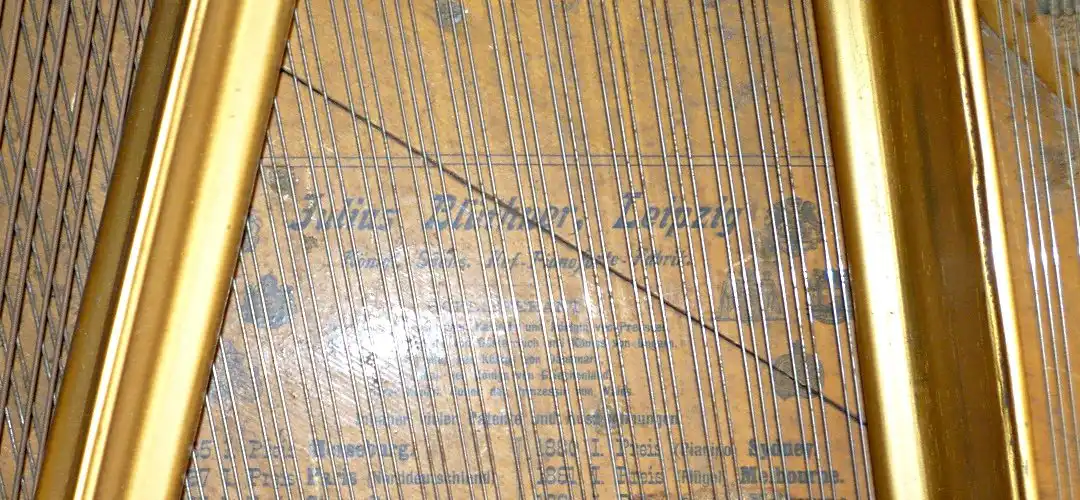
The large resonating wooden surface in the piano beneath the strings is the most prone to cracking. Soundboards consist of glued spruce boards and shrink when the humidity is too low, below 50%, so that cracks can form.
Cracks in the soundboard can cause the crown of the soundboard intended by the manufacturer, and thus the bridge pressure, to decrease. The volume and purity of the sound diminish, and extraneous noises (buzzing, etc.) may occur.
Older pianos often have cracks in the soundboard due to periods of overly dry room air and can still sound very beautiful. However, this must be taken into account in the instrument’s current value. Through-cracks are generally more critical than openings on one side only or hairline cracks with embedded dust running along the grain of the wood. Cracks under bridges are generally to be assessed as more critical.
When the acoustic system is renovated, a soundboard that already has cracks is usually dried out deliberately to provoke further cracking, and the cracks are then repaired with shims. The board is then sanded, bleached if necessary and resealed with shellac or similar. A soundboard renovated in this way should also be able to withstand shorter periods of slightly too dry room air. If the humidity is too low for longer periods, even a renovated soundboard will not remain undamaged.
Related: Piano renovation · Piano appraisal · Pianos for sale