




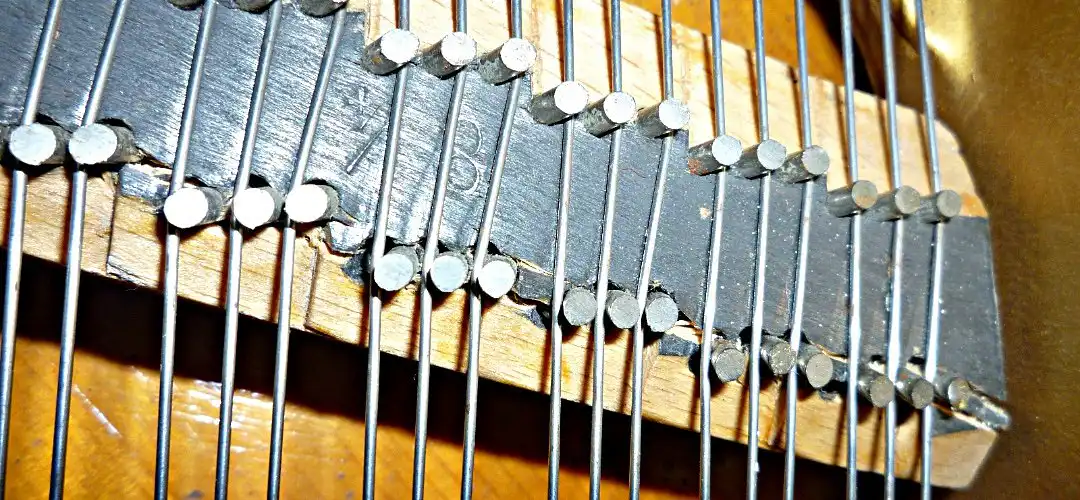
The bridges in a piano are glued onto the soundboard and, acoustically, connect the strings to the soundboard. These bridges have to withstand high loads and – since they are also made of wood – are at risk of cracking due to drying out. Fine hairline cracks on bridges are normal signs of age – as long as the bridge pins still guide the strings stably, this is not necessarily critical. Cracks or breaks running across the bridges, on the other hand, are critical, as the bridge pins lose their hold.
The exact position of the bridges is also essential for a good sound free of extraneous noise, since otherwise the strings are not guided precisely or the so-called bridge pressure – a defined difference in height at the bridge that exerts pressure on the strings from below – is no longer sufficient.
In front of the tuning pins, the strings run over metal bridges or through agraffes – cracks or breaks can occur here, too. Both are hard for a layperson to recognize – this damage is among the structural damage that a professional knows how to look for and find.