




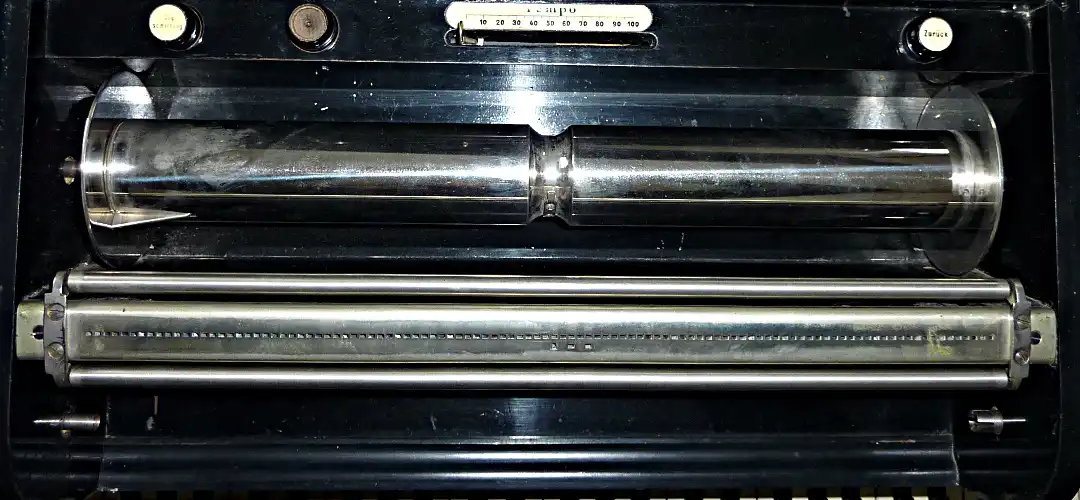
In addition to the very successful Phonola, Hupfeld AG in Leipzig launched the DEA (Latin for “goddess”) reproducing system in 1907. With it, Hupfeld AG wanted to position a product to compete with the earlier Welte-Mignon. We suspect that Hupfeld used the DEA technology for its artist rolls from the outset, but was too slow to bring a finished consumer product to market in competition with Welte. In 1912, Hupfeld advertised that it had launched the first reproducing grand piano – Welte only offered reproducing technology in grand pianos from 1913. However, the market for reproducing instruments was already almost saturated, and fashion demanded self-playing violins and other novelties. So the DEA system could not establish itself on the market. The Hupfeld DEA had the widest of all scales used, with 106 holes. Here, too, the expression controls for bass and treble are on the left and right.
DEA instruments are very rare today – mostly as Rönisch upright or grand pianos. Due to their comparatively limited distribution, only a few original rolls survive today.