




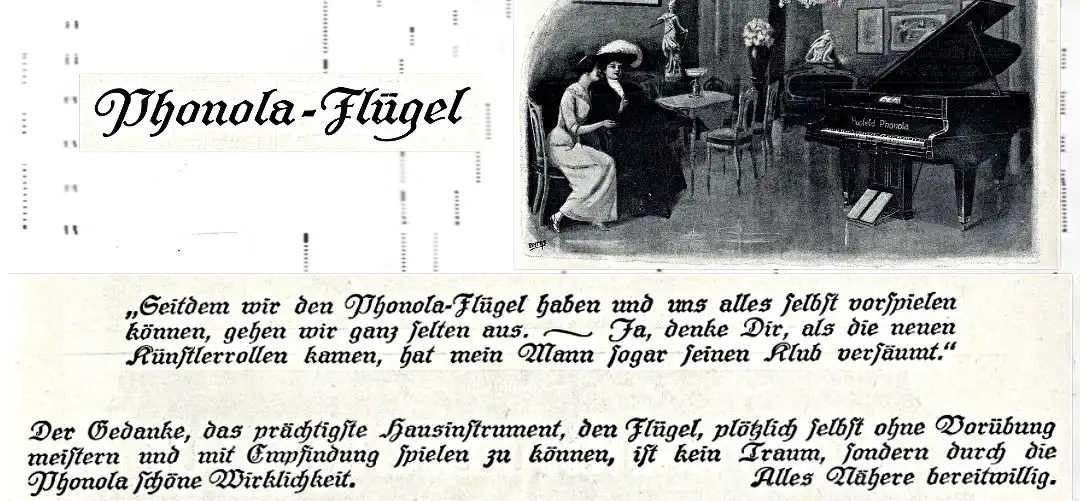
The question usually answers itself the first time a good pianola is experienced live. That is how it was for most people interested back then, too. When the first player pianos were introduced before 1900, there were very different reactions to these wondrous new devices.
In the trade press, reactions ranged from: “For a musically sensitive person, the idea of a mechanical piano is a true abomination” (M. Allhin, 1902) to “One only has to insert these rolls, perforated with all rhythmic nuances, […] to create the illusion of listening to a great artist. Is that not wonderful, and the realization of former fairy-tale fantasies at which our forefathers would have smiled?” (P. B. in the Zeitschrift für Instrumentenbau, 1905).
Despite the many tens of thousands of instruments made by Aeolian, Hupfeld, Welte and other manufacturers, orders could not be met in the first years. At times, more pianolas were made than pianos.
Then as now, the same many reasons apply for buying a pianola:
• Extended musical enjoyment – enjoying pieces of the piano literature that you cannot play on the piano yourself
• Special musical enjoyment – hearing the same pieces by different performers and by the composer himself
• Additional musical enjoyment – shaping pieces of the piano literature differently yourself using the pianola controls
• Prestige – representing yourself as a good host, musical culture and innovation (today rather nostalgic innovation)
• Fascination – for true marvels of mechanics / pneumatics / electrics that can reproduce this music
Which of these carries the most weight, along with additional motivations, will remain an individual decision. A significant advantage today compared with back then is that many thousands of beautiful music roll titles exist, some of which can no longer be found in the musical literature at all.