




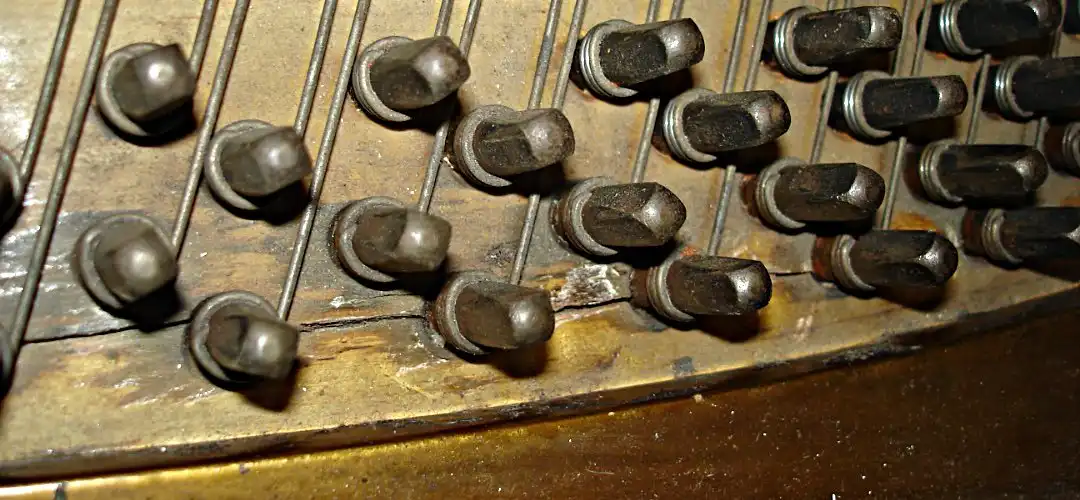
The approx. 20 tons of string tension in a piano bear, via the tuning pins, mainly on the wooden pinblock. Apart from a metal innovation by Crasselt&Rähse back then, all pianos to this day have pinblocks made of beech or multi-layer wood. Even if a metal cover or the cast-iron frame is visible from the front, the tuning pins sit in the wooden pinblock behind it.
Apart from very rare material weaknesses, a pinblock is damaged when the humidity is too low for a long time and the wood dries out too much. Once a pinblock has cracked, it does not close up stably again when the humidity is raised. Loose tuning pins or cracks make stable tuning, or even tuning at all, impossible. Replacing the pinblock is always possible in principle – but involves considerable investment.
Please also read about our piano appraisal service.