



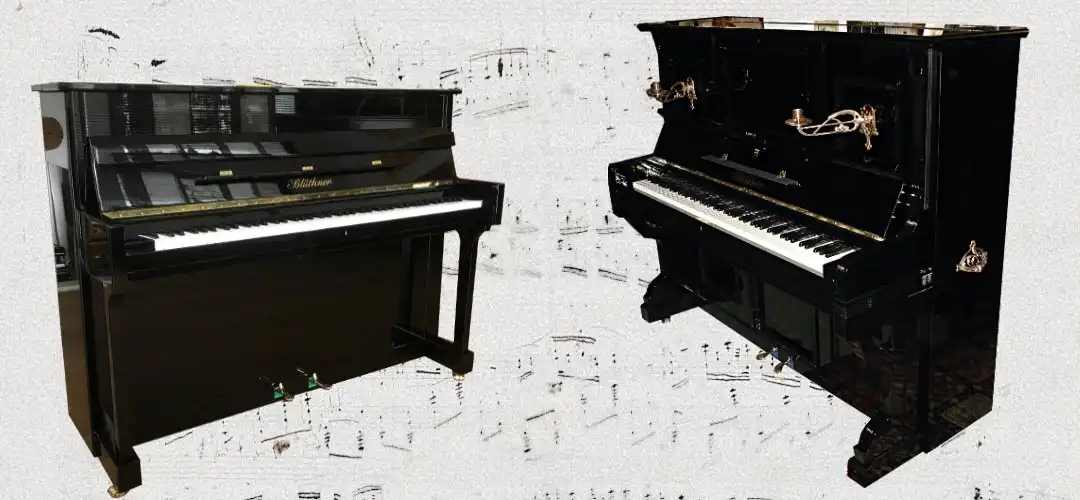
The advantages of a new piano are – as with a car – above all being the first owner, the manufacturer’s warranty, the untouched flawless condition, the possibility of choosing the design yourself, and possibly having the latest model.
The disadvantages, again as with a car, are the immediate loss of value of ~30–40% and the comparatively high purchase price right at the start, before you can tell whether playing the piano will really catch on. In addition, people are usually overly cautious with brand-new, high-quality-looking instruments and may curb children’s sometimes boisterous joy of playing with the typical warnings to be careful with the instrument.
For economic reasons, we would always recommend buying a good used piano – ideally from a trustworthy source, from a dealer, or from a good private seller accompanied by an expert. All the more reason to take a look at the tips on these pages. If you bear them in mind, you can buy a very beautiful, good-quality piano for relatively little money, far below new prices. This pays off especially for beginners on a limited budget and for young families. Should you then have to part with the piano after all, you will suffer a smaller financial loss.
In terms of sustainability, buying a used piano is also strongly recommended. The most important aspect for us is that pianos from before 1940 often have a very distinctive character and tone, both visually and in sound.