




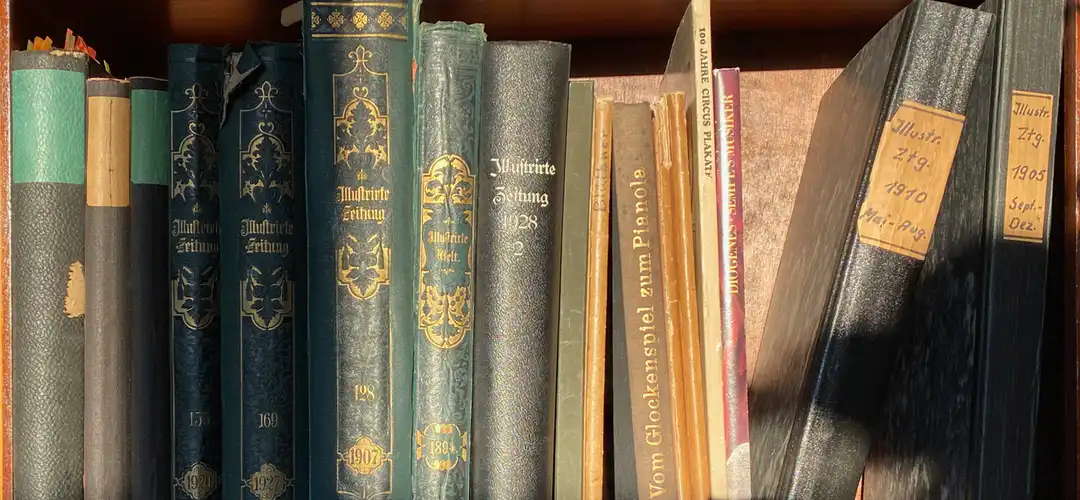
In addition to these books, there is of course a great deal of other literature worth reading on this topic. Some of the books mentioned above are still available (specialist retailers or Amazon, etc.) – but most can now only be found on the antiquarian market. Feel free to drop by here again from time to time – and let me know if you can recommend particular book titles
Below are some links on the subject of the pianola. Here, too, it is worth browsing, reading up and delving deeper – as valuable information about the pianola can also be found here.
In my view, one of the best websites on the subject of the pianola is the English site The Pianola Institute. It has a great deal of background information, pictures and sound material on the pianola in general and on the various manufacturers and systems.
The English Player Piano Group offers a lot of information, music examples, MIDI files, articles, etc. on its pages. Since England has always been one of the most important markets for pianolas, there is a large community of collectors there and interesting contacts.
This English website, The Player Piano Page, also offers a lot of interesting information on pianolas. At the same time, many sources, books, CD recordings and original advertisements can be seen there, and some can be purchased.
The American society for mechanical musical instruments, AMICA, also provides a lot of information on its pages. The AMICA Bulletin can also be bought and sent to you.
The forum of the Mechanical Music Digest contains a great many posts by various collectors, restorers and pianola owners. Extensive pictures and documents are also stored there, and you can get in touch with other pianola lovers around the world.
The video platform YouTube has now become a fantastic treasure trove of video and audio recordings on the subject. Enter the various search terms and you will find a great many lovely videos.
The Centre for Performance History contains extensive information on the performance practice of pianists in the 18th–20th centuries. These insights allow a much better understanding of music roll recordings – but the book “After the Golden Age” mentioned above illustrates this topic best.
On this American website, QRS Music Rolls, you can find and order the new QRS rolls still available today. There is also interesting information on the long history of QRS and the video on music roll production.
Based on the book “Faszination Player Piano” mentioned above, this site offers a lot of additional information, as well as reading samples and pictures from the book. It is worth a visit: Player-Piano-Konzerte.
The Gesellschaft für Selbstspielende Musikinstrumente (GSM e.V.) also offers information, articles, etc. on its website. Details about the society and membership are also given there.
In 2004, the Augustiner Museum set up a lovely website on M. Welte & Söhne of Freiburg. It now also offers a very nice way to find information on Welte music rolls – the directory of Welte-Mignon music rolls.