




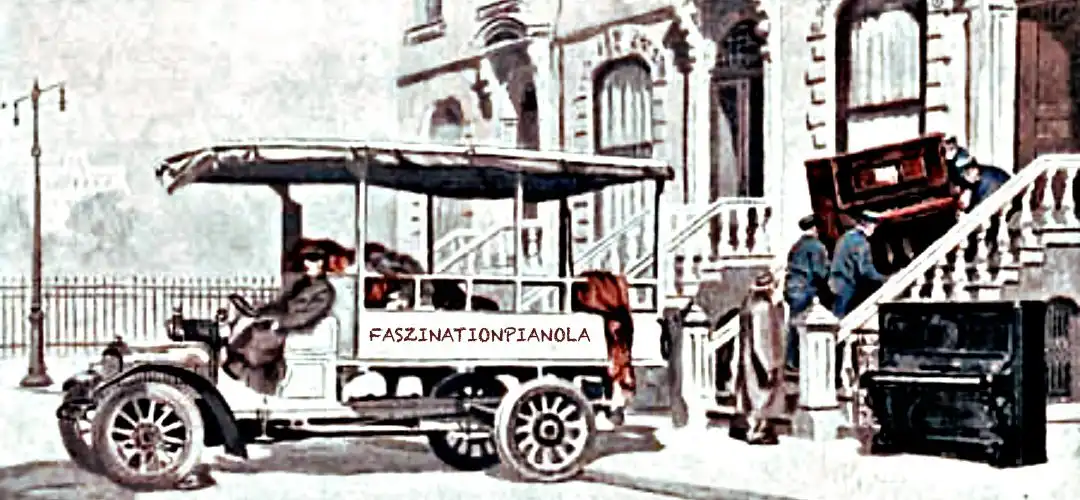
We love pianos! And the environment. That is why we offer what is probably a unique service.
Every piano deserves our appreciation – from a historical, a musical and an ecological point of view. In our blog post “How do I dispose of my piano?” we describe various ways of parting with a piano. Perhaps one of them is an option for you to find a good new home for the piano. If all efforts have failed, or if you are unable to deal with it any further, we are the right partner.
Even though in many cases recycling may really be the only option, we explore every possibility to find a way of preserving the piano after all. If there is no other prospect for the piano, our sustainable piano recycling service is the most sensible decision. This way we return as many of the valuable materials as possible to the cycle of use and help to avoid environmental damage caused by improper storage or dismantling.
Disposal is not a stunt.
Sustainable recycling is, in many respects, the opposite of what happens to discarded pianos today. Pianos are left in the garden to rot, set on fire, thrown off roofs as a stunt, smashed and put in the trash. YouTube is full of videos of such acts. Definitely entertaining, but not without danger – and above all, not really sustainable.
Free of charge does not mean it costs nothing.
At best, the instruments are taken to scrapyards and recycling centers by their owners or by piano movers, usually for a flat fee of 150.00 – 250.00 euros. In some regions, recycling centers accept them free of charge; elsewhere there is a disposal fee of around 150.00 euros – and sometimes they are refused altogether. There is always a cost – if not directly, then indirectly to the environment and thus to the general public.
A scrapyard? Not necessarily the best solution.
At the scrapyard, the pianos are then crushed by an excavator or lifted a few meters by a crane and dropped, and the remaining materials are roughly separated at best – or sent off for incineration in their entirety as combustible waste, which is in fact the official definition. Bavarian Television (BR) uploaded a fine short film on the subject to YouTube on its culture channel Capriccio (author: Rachel Roudyani).
Datenschutz
1. Wer ist verantwortlich?
Marc Widuch
Faszinationpianola
Weil 25
85229 Markt Indersdorf
Telefon: +49 (0) 89 88 90 20 69
E-Mail: info@faszinationpianola.de
Einen Datenschutzbeauftragten haben wir nicht benannt, weil wir dazu gesetzlich nicht verpflichtet sind.
2. Das Wichtigste in Kürze
- Wir setzen keine Analyse- oder Tracking-Werkzeuge ein und zeigen keine Werbung.
- Beim Besuch unserer Website werden keine Cookies gesetzt, die eine Einwilligung erfordern.
- YouTube-Videos werden erst geladen, wenn Sie darauf klicken.
- Personenbezogene Daten verarbeiten wir nur, soweit es für den Betrieb der Website, für die Beantwortung Ihrer Anfragen und für die Abwicklung von Aufträgen nötig ist.
3. Hosting und Server-Protokolle
Unsere Website wird bei der IONOS SE, Elgendorfer Str. 57, 56410 Montabaur, gehostet. Mit IONOS haben wir einen Vertrag zur Auftragsverarbeitung nach Art. 28 DSGVO geschlossen.
Bei jedem Aufruf unserer Website speichert der Server automatisch Daten in sogenannten Server-Logdateien:
- IP-Adresse
- Datum und Uhrzeit des Zugriffs
- aufgerufene Seite bzw. Datei
- übertragene Datenmenge
- Browser und Betriebssystem
- die zuvor besuchte Seite (Referrer)
Diese Daten brauchen wir, um die Website sicher und stabil auszuliefern und um Angriffe zu erkennen. Rechtsgrundlage ist unser berechtigtes Interesse nach Art. 6 Abs. 1 lit. f DSGVO. Die Protokolle werden nach kurzer Zeit, in der Regel nach wenigen Tagen, gelöscht oder anonymisiert.
4. Verschlüsselung
Diese Website nutzt aus Sicherheitsgründen eine SSL- bzw. TLS-Verschlüsselung. Sie erkennen sie an „https://“ und am Schloss-Symbol in der Adresszeile Ihres Browsers.
5. Kontakt- und Anfrageformulare, E-Mail und Telefon
Wenn Sie uns über eines unserer Formulare, per E-Mail oder per Telefon kontaktieren, verarbeiten wir Ihre Angaben, um Ihre Anfrage zu beantworten. Je nach Formular sind das:
- Kontakt und Produktanfrage: Name, E-Mail-Adresse, Telefonnummer (freiwillig) und Ihre Nachricht
- Anfrageformular zu Ihrem Instrument: zusätzlich Angaben zum Instrument und zum Standort sowie Fotos, die Sie hochladen
- Zugang zu den Hupfelder Fotobüchern: Name, Rolle, Institution, Anschrift, Nutzungsgrund und E-Mail-Adresse
Die Angaben werden per E-Mail an uns übermittelt und zusätzlich in der Datenbank der Website gespeichert. Zum Schutz vor Spam verwenden wir ein unsichtbares Prüffeld. Dabei werden keine Daten an Dritte übermittelt.
Geht es um ein Angebot oder einen Vertrag, ist die Rechtsgrundlage Art. 6 Abs. 1 lit. b DSGVO. In allen anderen Fällen ist es unser berechtigtes Interesse an der Beantwortung Ihrer Anfrage (Art. 6 Abs. 1 lit. f DSGVO).
Wir löschen Ihre Anfrage, sobald sie erledigt ist und keine gesetzlichen Aufbewahrungspflichten bestehen.
6. Angebote, Aufträge und Bestellungen
Unsere Produkte, Dienstleistungen und unser Buch erhalten Sie auf Anfrage. Kommt ein Auftrag zustande, verarbeiten wir die dafür nötigen Daten, z. B. Name, Anschrift, Kontaktdaten und Rechnungsdaten. Rechtsgrundlage ist Art. 6 Abs. 1 lit. b DSGVO.
Rechnungen und andere steuerlich relevante Unterlagen bewahren wir 6 bzw. 10 Jahre auf (§ 147 AO, § 257 HGB). Rechtsgrundlage ist Art. 6 Abs. 1 lit. c DSGVO.
Wenn Sie mit PayPal bezahlen, übermitteln wir die für die Zahlung nötigen Daten an die PayPal (Europe) S.à r.l. et Cie, S.C.A., 22-24 Boulevard Royal, L-2449 Luxemburg.
7. YouTube-Videos (erst nach Klick)
Auf einigen Seiten binden wir Videos der Plattform YouTube ein. Anbieter ist die Google Ireland Limited, Gordon House, Barrow Street, Dublin 4, Irland.
Die Videos werden zunächst nicht geladen. Sie sehen nur ein Vorschaubild, das auf unserem eigenen Server liegt. Erst wenn Sie darauf klicken, wird eine Verbindung zu YouTube hergestellt. Dabei werden insbesondere Ihre IP-Adresse und Informationen über die aufgerufene Seite an Google übermittelt. Google kann dabei Cookies setzen und Daten auch in die USA übertragen. Google ist nach dem EU-US Data Privacy Framework zertifiziert.
Rechtsgrundlage ist Ihre Einwilligung durch den Klick (Art. 6 Abs. 1 lit. a DSGVO, § 25 Abs. 1 TDDDG). Weitere Informationen finden Sie in der Datenschutzerklärung von Google: https://policies.google.com/privacy
8. Ihre Auswahl „Inhalte immer anzeigen“
Beim Vorschaubild können Sie ein Häkchen setzen, damit Videos künftig automatisch geladen werden. Nur dann speichern wir Ihre Auswahl in einem Cookie namens „embed-privacy“ auf Ihrem Gerät, für längstens ein Jahr. Rechtsgrundlage ist Ihre Einwilligung (§ 25 Abs. 1 TDDDG, Art. 6 Abs. 1 lit. a DSGVO).
Sie können diese Auswahl jederzeit widerrufen: Haben Sie sie getroffen, erscheint direkt hier darunter ein Schalter dafür. Außerdem können Sie das Cookie jederzeit in Ihrem Browser löschen.
Embed providers
Enable or disable embed providers globally. By enabling a provider, its embedded content will be displayed directly on every page without asking you anymore.
9. Links zu anderen Angeboten
Unsere Seiten enthalten einfache Links, z. B. zu unseren Profilen in sozialen Netzwerken und zur Spendenmöglichkeit bei PayPal. Dabei werden keine Daten übertragen, solange Sie den Link nicht anklicken. Nach dem Klick gelten die Datenschutzbestimmungen des jeweiligen Anbieters.
Spenden über PayPal wickelt die PayPal (Europe) S.à r.l. et Cie, S.C.A. ab. Wir erhalten dabei Ihren Namen, Ihre E-Mail-Adresse und den Betrag.
10. Ihre Rechte
Sie haben jederzeit das Recht auf:
- Auskunft über Ihre gespeicherten Daten (Art. 15 DSGVO)
- Berichtigung unrichtiger Daten (Art. 16 DSGVO)
- Löschung (Art. 17 DSGVO)
- Einschränkung der Verarbeitung (Art. 18 DSGVO)
- Datenübertragbarkeit (Art. 20 DSGVO)
- Widerruf einer erteilten Einwilligung mit Wirkung für die Zukunft (Art. 7 Abs. 3 DSGVO)
Widerspruchsrecht (Art. 21 DSGVO): Soweit wir Daten aufgrund unseres berechtigten Interesses verarbeiten, können Sie dieser Verarbeitung aus Gründen, die sich aus Ihrer besonderen Situation ergeben, jederzeit widersprechen.
Eine kurze Nachricht an info@faszinationpianola.de genügt.
11. Beschwerderecht
Sie können sich bei einer Datenschutz-Aufsichtsbehörde beschweren. Zuständig für uns ist das Bayerische Landesamt für Datenschutzaufsicht (BayLDA), Promenade 18, 91522 Ansbach, www.lda.bayern.de
12. Sonstiges
Damit das Hinweisfenster zu unserem Buch nur einmal pro Besuch erscheint, merkt sich Ihr Browser dies für die Dauer der Sitzung (Session Storage). Der Eintrag wird beim Schließen des Browsers gelöscht und nicht an uns oder Dritte übertragen. Rechtsgrundlage ist § 25 Abs. 2 Nr. 2 TDDDG.
Wir treffen keine automatisierten Entscheidungen und erstellen keine Profile. Sie sind nicht verpflichtet, uns Daten bereitzustellen. Ohne Ihre Kontaktdaten können wir eine Anfrage allerdings nicht beantworten.
Stand: November 2026
Incineration – clean air, highly toxic residues.
A piano also contains potentially harmful substances, such as the lead weights in the keys or dampers, which are often oxidized in old pianos, or excessive accumulations of dust and mold. Even though Germany’s incineration plants are probably among the cleanest in terms of emissions, according to a 2017 article by Deutschlandfunk Nova several million tons of slag and filter ash remain every year as highly toxic residues that can only be locked away in mine tunnels – and even this does not seem to be an undisputed method of permanently preventing possible future environmental damage from these substances.
We want to do things differently!
In our view, none of this is an appreciative or environmentally sound use of resources. We do things differently. Just as carefully and expertly as the raw materials were once selected and processed, we carefully and expertly dismantle the piano into its components so that each can be put to a suitable new use. Yes, this is the harder way and sometimes more expensive. Nevertheless, we encourage you to pay the piano and the environment this tribute at what may be the end of the piano’s life.
A piano weighs between 200 and 450 kg and contains around 10,000 individual parts, assembled over hundreds of hours. These many parts are made of valuable resources, which in turn were processed using vast amounts of resources such as water and energy. Then there are the intangibles: the many memories and moments that such a piano has witnessed, and in part shaped, over the decades. Sustainable piano recycling requires expertise, specialized tools and processes, as well as know-how in handling old pianos and the valuable and residual materials used in different ways in different eras. We are the first address for this.
On request, and for a small surcharge, we can also document your piano’s final journey. The outer scars and the inner workings of a piano often tell part of its fascinating story.
What exactly do we offer?
We offer five ways of disposing of your piano, depending on the quality and condition of the instrument and the nature of the pickup location. By quality we mean the build quality, usually found in brand-name pianos, the key covering, and the presence of fittings such as candlesticks and hardware. The condition ranges from good original condition to defective due to critical structural damage. The nature of the pickup location determines the transport costs; a pickup from a ground floor without steps is considerably easier than carrying the piano down several floors. A higher fee applies if the piano contains fewer valuable materials, has a higher proportion of residual materials that are difficult to separate or recycle (e.g. modern lacquers, plastic coverings, etc.) – or additional pollutants / pest infestation (oxides, mold, etc.).
In most cases, disposal for a fee will be the only option left, as you have no doubt already tried other ways. Nevertheless, there are many good reasons to make this investment. Here are some examples of why it is a good decision.
- 1. Gain space – a piano takes up between 2 and 4 square meters. With an average gross rent in Germany of at least 10.00 euros per square meter, you could use this space, which costs you 240.00 – 480.00 euros in rent per year, for something else.
- 2. Avoid maintenance costs – if you still have the piano tuned regularly every 12–18 months or so, which is necessary to maintain its value, you save the average 120.00 euros this costs.
- 3. Avoid rising costs – we expect disposal costs to rise in the future and the chances of selling pianos to continue to fall rapidly, so prompt disposal will probably help to avoid costs.
- 4. Enable use – if there is still a chance for us to bring your piano back into use, you give the piano and its player new moments of joy.
- 5. Return resources – if the instrument can no longer be brought back into use, you at least ensure that its valuable materials are sustainably returned to the cycle and help to reduce environmentally harmful extraction of new raw materials.
- 6. Promote health – old pianos can contain harmful substances (lead oxides, mold, dust) that pollute the indoor air, so disposing of them reduces this risk.
So that we can check which of these options we can offer you for your piano, please fill out our “FASZINATIONPIANOLA instrument form”. We will then get back to you promptly with an offer.